I’m still one of those musicians who performed with large stage monitors (wedges). For over 20 years, however, in-ear monitors, or IEMs for short, have been the standard for monitor sound on stage. They allow you to move freely around the stage, have the same good sound everywhere and have your own personalised monitor mix. Musicians often wear these in-ear headphones in dazzling colours, gold-plated or discreetly matched to their skin colour.
Almost completely unnoticed, IEMs have also gained a firm place among music listeners. This is not least due to the fact that excellent IEMs made in China are now available for less than €50. In the past, you had to pay €300 or more for a reasonably decent pair. Of course, there are also high-end IEMs today that can cost €3000, but the sound quality of many inexpensive models has nothing to hide.
I discovered these and other inexpensive IEMs when I was looking for in-ear headphones for travelling. Of course, I also went for wireless earbuds first, namely the Sony LinkBuds S , which I liked much better than their big brother, the Sony WF-1000XM5 , and far better than the Apple AirPods II Pro.
With active noise cancellation, hands-free function and transparency mode, wireless earbuds are extremely practical and comfortable for everyday use. However, I was still missing something in terms of sound, which made me try wired IEMs. Now I have some excellent headphones in my studio, like the Beyerdynamic 770 and 900 HD, Sennheiser HD600 or an Audio-Technica M50x, but I gave the cheap IEMs a chance. So much for now: I was more than amazed. This is not least due to the fact that many IEMs have been trimmed to the so-called Harman curve.
What is the Harman curve and what does it have to do with headphones?#
The Harman Curve is a frequency response developed by Harman International that aims to define the ideal balance and sound for headphones. It is based on extensive research and user studies that indicate how different people perceive the “best” or “most natural” sound.
The Harman curve attempts to create a sound signature that corresponds to a natural listening environment, as if you were listening to music live in a natural setting, such as a living room. It slightly emphasises the low frequencies (bass) and the high frequencies (treble), while keeping the mid frequencies relatively flat. This is intended to produce a warm and clear sound quality that is pleasing to a wide range of listeners.
The function of the Harman curve in headphones is to give manufacturers a target frequency response to aim for when developing their products. Headphones that follow this curve should provide the listener with a more balanced and realistic sound experience, regardless of music genre or recording quality.
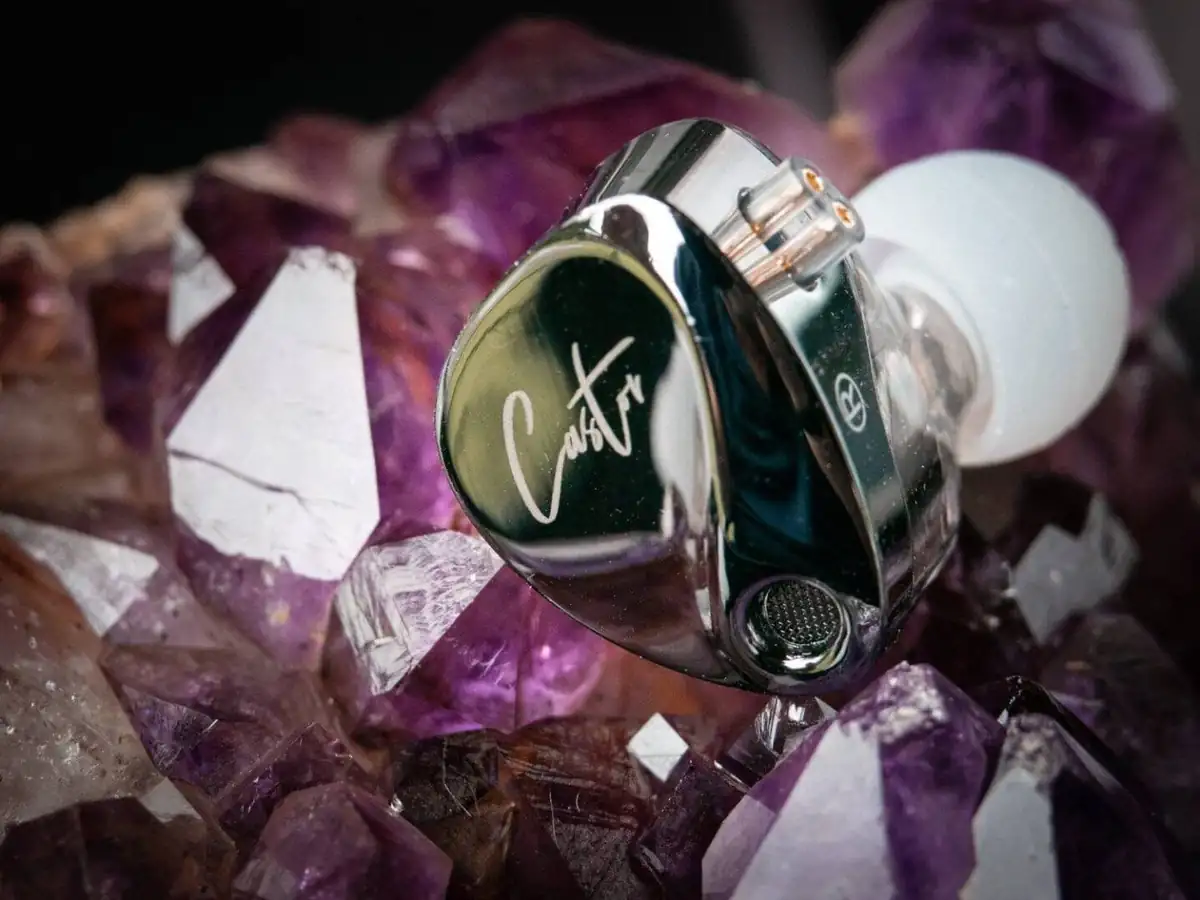
KZ Castor in-ear monitor#
One of the leading Chinese manufacturers is the company KZ, which means Knowledge Zenith. Admittedly, the abbreviation is anything but ideal in the German-speaking world, but what the heck. In addition to IEMs, KZ also produces wireless headphones (TWS) and normal headband headphones.
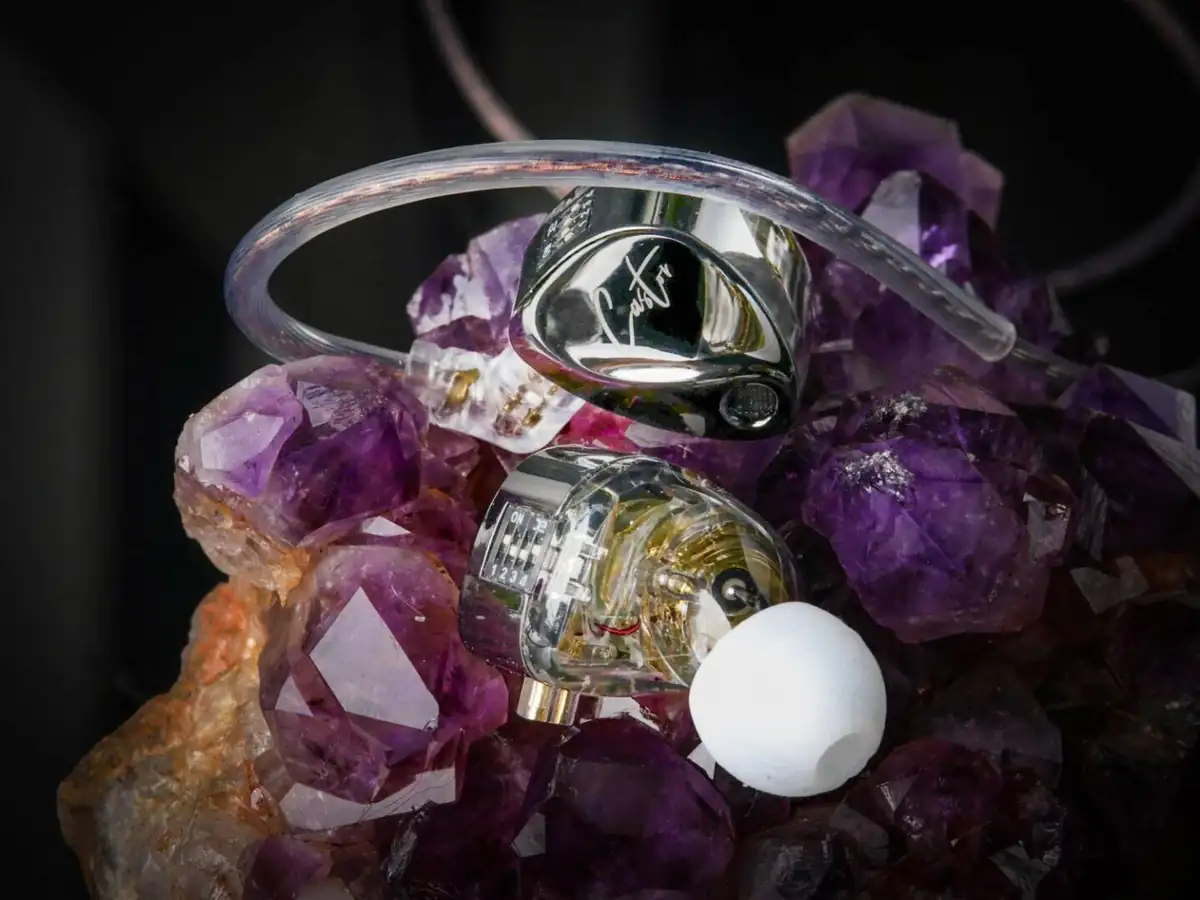
The KZ Castor IEMs cost just €26 and you get very high-quality looking IEMs with a pleasing design, 3 pairs of silicone ear tips (plugs) and a pair of memory foam ear tips. They also come with a fairly neat cable with the usual 2-pin connectors and a 3.5 mm jack plug.
The KZ Castor IEMs are trimmed to the Harman curve and have a very balanced sound profile. The bass is powerful but controlled, which is probably due to the design of the Castors with their dual drivers.

The treble range is brilliant without being overpowering. I particularly like the important mid-range, which is very precise and reproduces voices, guitars and other instruments very well. The sound stage is also excellent and open.
A special feature of the KZ Castor IEMs is the tuning option via 4 dip switches (this used to be called a mouse piano among electronics engineers). This allows the sound signature to be customised once again.
Switch 1: 1 dB bass boost
Switch 1 2: 2 dB bass boost
Switch 3: 1 dB in the mid and treble range
Switch 3 4: 2 dB in the mid and treble range
I like the variant with 1 2 activated best and it is probably a little closer to the ideal Harman curve.
In practice:#
Like almost all IEMs, the KZ Castor work very efficiently and are easy to control. The volume levels that can be achieved with these IEMs are remarkable. However, they show surprisingly little tendency to distort. The impedance is 16-20 ohms and the sensitivity is a remarkable 103 - 105 dB (depending on the switch configuration).
I currently prefer the foam eartips as they are very comfortable, adapt perfectly to the ear canal and also provide an excellent seal against ambient noise. The castors can also be worn for a long time without pain or pressure. As I like to record guitar and bass with headphones, I now prefer IEMs. You don’t get “hot ears” and the amazingly deep yet crisp bass reproduction, with very analytical mids at the same time, is simply fun. Especially when recording bass tracks, the IEMs almost give me the feeling of playing with a bass amp and speakers.
It’s more than amazing how good headphones can be for less than €30. This is also evident when listening to music with a smartphone. The sound of the Castors and other IEMs is simply fun. The reproduction is more precise than with wireless headphones and I can hear details that I have not been able to discover with my other headphones so far.
As I can now fully appreciate the sound signature of the IEMs, I see no reason why they shouldn’t be used for mixing.
Linsoul CCA Trio IEMs tested#
The CCA Trio IEMs are also made by KZ and sold under the brand name Linsoul. At around €42, they are significantly more expensive than the KZ Castor IEMs, but have 3 dynamic 8 mm drivers. Like the Castor, the CCA Trio also have 4 dip switches for individual sound adjustment. The cable is of a higher quality than that of the Castor and overall they have an even higher quality finish.
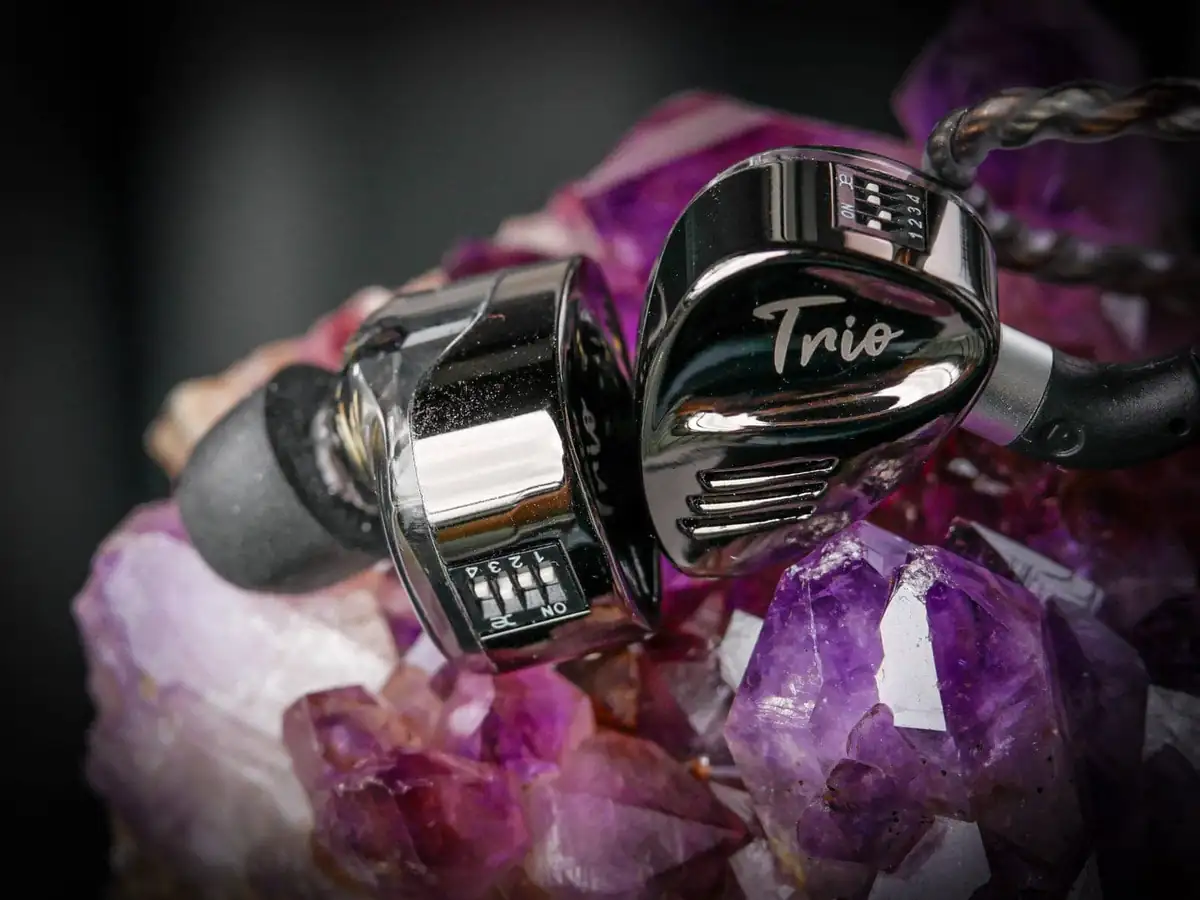
In terms of sound, the CCA Trio are a little more balanced than the KZ Castor. The upper bass range is a little more subdued, but I have the feeling that the sub-bass is even more powerful and crisp. The Trios are also a little better in the mid-range and the treble range is a little smoother. The KZ Castor are a bit more of a “fun maker” here, while the Trio go even further in the direction of neutral reproduction.
The CCA Trio also seal off sound from the outside a little better (with the same ear tips) than the Castor - at least to my ears.
Conclusion#
For me, IEMs have not only become an alternative to headband headphones - I now use them almost exclusively. The sound and wearing comfort, as well as the isolation from the outside, are simply marvellous. I also use the IEMs for listening to music and even when I’m travelling, when things like transparency mode, hands-free calling or ANC aren’t important.
With accessories such as a small USB-C DAC , you can also connect these IEMs to smartphones, tablets and laptops that no longer have a headphone socket and get excellent sound quality. With the FiiO BTR3K , the IEMs (and not only those) become wireless headphones with hands-free function, which brings even more convenience.
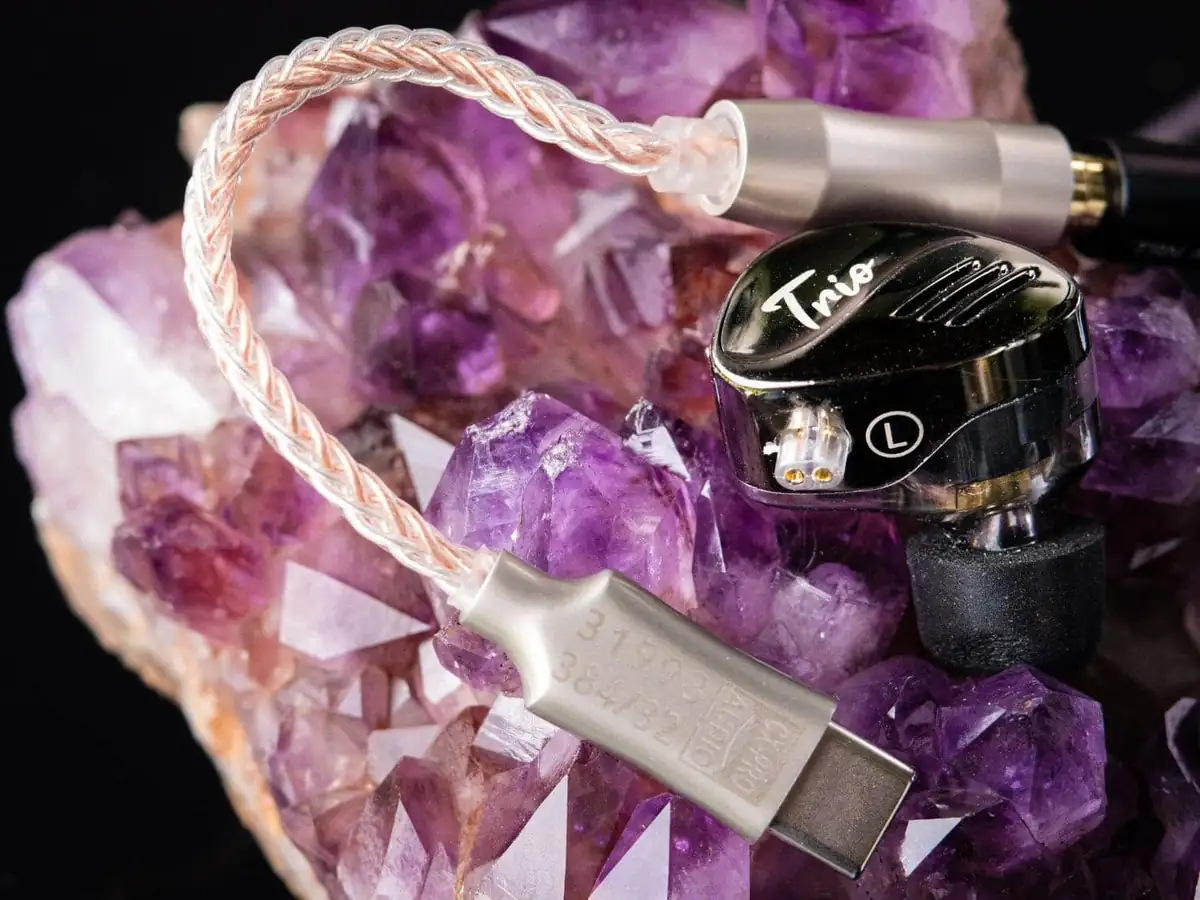
IEMs have one disadvantage: they can develop into a passion for collecting. In various forums and on Reddit, there are quite a few users who have 10 or more IEMs in their collection.
More info: